This article was originally written for the 10th anniversary edition of Ananke magazine
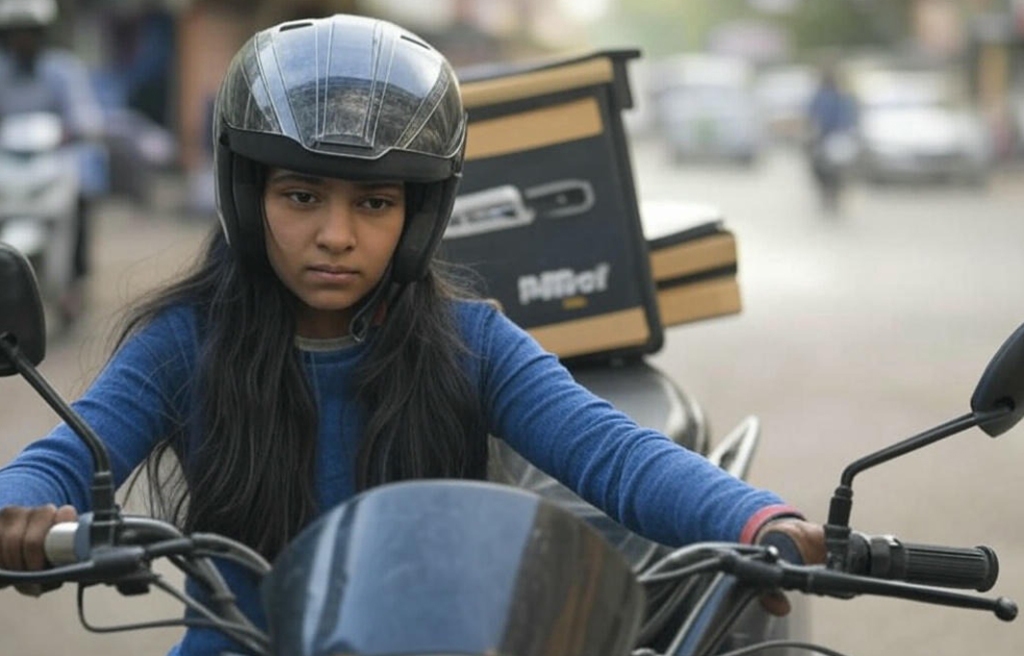
The sight of uniformed women delivering groceries and meals on scooters is no longer a rarity in cities like Delhi and Mumbai. Nor is it unusual to see a woman driver pull up when you book a cab through an app. There is also a boom in on-demand app-based services such as beauty or domestic work in Indian metros, leading to more women joining what is called the gig economy—a labour market run through digital platforms. But has this new development led to women’s welfare, employment opportunities, and labour rights? Recent studies point to both advantages and disadvantages of platform-based gig work for women in South Asia.
Digital platforms connect clients with workers for specific tasks or ‘gigs’. Once the task is done, the platform takes a commission. Instead of owning tools or equipment, these platforms focus on connecting people. While they are part of what’s often called the ‘sharing economy’, many of these platforms grow their own profits by relying on workers’ time and resources including phones and vehicles, as well as customers’ assets, including their homes where the labour takes place.
Gig economy in South Asia
In the past 10 years, app-based platforms have become quite common in cities across India, Bangladesh, and to a smaller extent in Pakistan. These platforms have built on the region’s huge informal economy and increasing access to smartphones and mobile internet. The platforms mostly operate in densely populated cities and focus on urban services like transportation, delivery, beauty, childcare, home repairs and similar location-based activity.
There’s also another kind of online gig work—that of remote white-collar tasks like data entry, clerical work, writing, translation, sales, multimedia and creative services. The Indian Subcontinent leads the world in supplying this kind of freelance labour: India supplies 26 percent of online workers; Bangladesh is at second place with 15 percent; and Pakistan in third place with 12 percent. The United States is a distant fourth with 5 percent of all supply.
The Fairwork project, which rates location-based gig platforms in 38 countries across five continents, has found better conditions for gig workers in India as compared with Bangladesh and Pakistan, and even the US, though there is a still a long road ahead to ensure economic growth for all. The project, which is coordinated from the Oxford Internet Institute, University of Oxford, and the WZB Berlin Social Science Center, has been tracking 11 platforms each in India and Bangladesh, and six in Pakistan. India’s report for 2024 found companies like Big Basket, Swiggy, Urban Company and Zomato ranking six out of 10 on parameters such as fair pay, fair conditions, fair contracts, fair management and fair representation. BluSmart and Zepto follow with five and four points, respectively. Other companies, including Uber, scored zero.
Bangladesh’s last report in 2023 found Daraz and Sheba tied at five points, HelloTask at four, and the rest, including Uber, at one or nil points. In contrast in Pakistan in 2023, all six gig companies including the much-advertised Bykea, Careem, FoodPanda and Uber, scored zero. USA—the country with the maximum gig platforms worldwide—earned just two points each for the top three companies in 2023, and zero points for 10 others.
One of the reasons for the better performance of gig platforms in India is the significant power of trade unions and increasing pressure on the federal and state governments to codify gig workers’ rights. In the 2024 general elections, two leading Indian political parties promised to act on behalf of gig workers in their manifestos. Draft bills have been filed in Karnataka and Jharkhand, while Rajasthan became the first Indian state to pass an Act for gig workers’ welfare in 2023. Other states too have made the right noises about assuring legislation for gig workers.
Though Bangladesh’s government has not yet taken any steps towards ensuring rights, the workers themselves have been getting organised through online social networks such as Facebook groups, indicating a positive direction for worker rights in future.
The female factor
The gig economy is often seen as a new phenomenon tied to technology and platforms, but the truth is that women have been doing gig-style work for ages, whether it’s hourly jobs in sanitation and construction or task-based jobs in crafts and salons. Their work lives are influenced by a range of other factors, including local politics, labour laws at different levels, and social issues like caste, religion, and community dynamics.
Due to such cultural factors as well as the digital divide—which leaves women way behind men in terms of education, access to digital devices, and fintech services—women in the Subcontinent make up a very small proportion of the gig economy. Just 2 percent of gig workers in India are women (about 100,000 in total), and about 9 percent in Bangladesh (about 58,500). Gender discrimination follows them to the workplace—including in limited choice of work, gender wage gap, issues of safety and sexual harassment, and fewer opportunities for growth.
The gig economy—especially the location-based, on-demand service sector—sells the idea of ‘flexibility’, where workers can supposedly choose when, where, and how they work. But reports have shown that this so-called promise of flexibility doesn’t live up to the hype, especially for women workers. The work is assigned by algorithms that prioritise busy service hours, so women don’t always get to choose jobs that fit around their unpaid responsibilities at home. They also can’t negotiate or challenge the system—they have to accept the gigs and pay they’re given, or risk being kicked off the platform entirely.
This aspect of gig work points to a lack of basic legal and social protections. It’s hard to organise against companies run by algorithms, not people. Unions led by women barely exist, even in industries like domestic work and beauty services, where most workers are women. Instead, women tend to negotiate directly with companies or rely on informal WhatsApp groups for support. In mixed-gender unions, women often feel left out, and their voices go unheard.
Issues like maternity leave are barely discussed. The law on workplace sexual harassment in India—the Vishakha Guidelines—doesn’t apply to gig workers, leaving them vulnerable. While women-centric cab companies in India such as TaxShe inform women about this law during orientation, women drivers working with larger companies like Uber and Ola, or with food delivery apps, have to fend for themselves. Since the customer’s rating decides their future on the app platform, women are often hesitant to report problems. In fact, safety concerns heavily influence whether women even join or stay in the workforce. Pakistan’s few female cab drivers are now quitting due to extreme harassment and safety issues, besides bleak working conditions. Women delivery workers in India earn 10 percent less than men as they can’t always benefit from surge pricing or incentives—since they avoid risky shortcuts or unsafe areas, especially at night.
In Bangladesh’s white-collar gig economy, including platforms like Upwork and Fiverr, women work longer hours—40.37 hours per week versus 35.90 for men—but earn significantly less (USD 330 for men versus USD 223 for women). This is despite the fact that Bangladeshi women remote workers are better educated: 47 percent of the women have a graduate degree compared to 25 percent of the men.
While many women prefer freelancing due to additional unpaid work at home and caregiver responsibilities, domestic workers—who are the most vulnerable of all categories of gig workers—prefer steady incomes. But the gig economy is poorly regulated, leaving workers open to exploitation. Platforms label them as ‘partners’ or ‘independent contractors’ instead of employees, so they miss out on protections like pensions, maternity leave, or insurance. India’s new Code on Social Security 2020 is the first law to recognise gig workers, but it has not yet been implemented and doesn’t cover domestic workers—a sector dominated by women from lower economic backgrounds.
That said, on-demand platforms do bring some structure to the chaotic, informal blue-collar job market in these countries. Unorganised workers in this region face challenges like low pay, job insecurity, lack of skills, and limited access to technology. In this scenario, the platform economy has the potential to help marginalised workers—especially women—gain financial independence by making self-employment easier, helping them open bank accounts, and enabling them to receive digital payments. Some hybrid models in India offer benefits like health insurance, provident funds, and maternity leave, especially when NGOs are involved. One example is the Azad Foundation in India, which has given hundreds of women an avenue to earn as cab drivers through the Sakha cab service, while ensuring safety and dignity of labour. Such platforms also give women more flexibility to balance work and home responsibilities. There are other examples of women-focused companies helping with training and retention, such as Urban Company, which has regular re-training for beauticians, helping them learn transferable skills.
Moving forward, more regulation and laws are needed across the region to ensure worker rights. Public sector and private companies need to work together to optimise productivity while generating equitable employment for all genders.
Aekta Kapoor is the Delhi-based founder and editor of eShe magazine and the nonprofit initiative South Asia Union. She features in and as ‘An Unsuitable Girl’ in the Amazon Prime documentary web series ‘Love Storiyaan‘, season 1 episode 1. She is currently pursuing her Master’s in Media, Ethics and Social Change from University of Sussex, UK.






 Coralesque
Leave a reply to MiniPay launches stablecoin-backed USD & EUR accounts to enable global payouts for freelancers, creators & sellers – Opera Newsroom Cancel reply